Winter Haven's downtown is listed on the National Register of Historic Places as the Winter Haven Historic District, with a walkable core of early 20th century architecture, local shops, and community gathering spaces.
Downtown Winter Haven
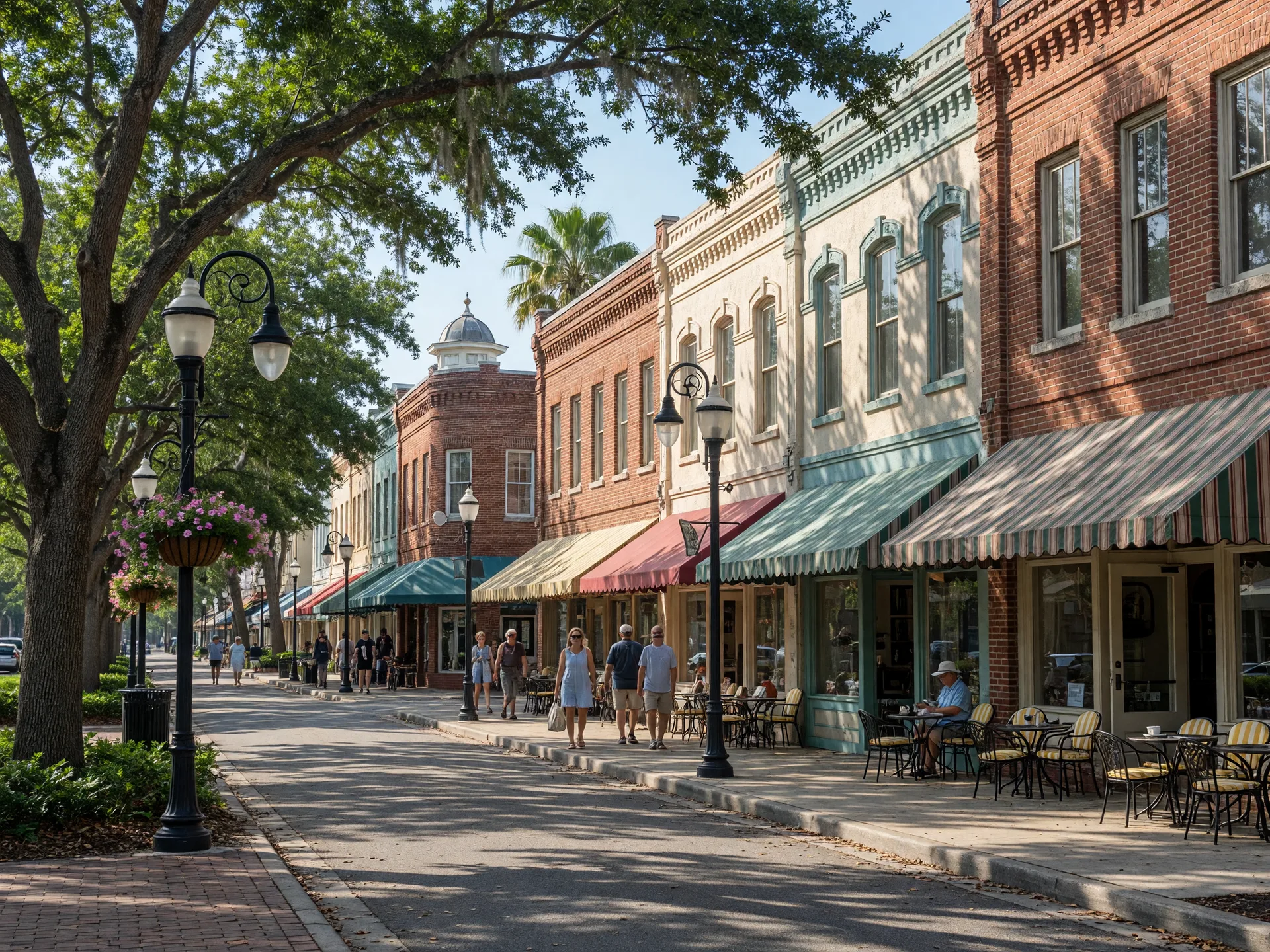
The Winter Haven Historic District, roughly bounded by Central Avenue, Sixth Street, and Avenue A Northwest, contains a remarkably intact collection of commercial, civic, and residential architecture spanning the 1910s through the 1940s. The downtown streets are lined with brick and stucco storefronts, many with original awnings and decorative parapets, shaded by mature live oaks draped in Spanish moss.
Central Avenue is the main thoroughfare, where you will find an eclectic mix of locally owned boutiques, antique shops, cafes, restaurants, and professional offices. The downtown has undergone a thoughtful revitalization in recent years, with streetscape improvements, new public spaces, and a growing arts and dining scene that draws both residents and visitors.
One of Winter Haven's most notable architectural contributions is the work of Gene Leedy, a founding member of the Sarasota School of Architecture, whose mid-century modern designs are scattered throughout the city. Leedy's buildings — characterized by clean lines, open floor plans, and integration with the Florida landscape — give Winter Haven a distinctive architectural layer beyond its early 20th century historic core.
Publix Supermarket No. 1
One of Winter Haven's most celebrated historic sites is the original Publix supermarket, opened in 1930 by George W. Jenkins on the corner of Third Street and Central Avenue. The building is an Art Deco gem with a distinctive stepped facade, green Terrazzo storefront, and large glass windows. It was added to the National Register of Historic Places in 2021 and now houses a retail space while commemorating the birthplace of a Florida grocery institution.
The Wonder House
A truly one-of-a-kind residence, the Wonder House was built in 1928 by Conrad Schuck, an engineer who incorporated dozens of innovative features into a single Mediterranean Revival home. The house has a built-in vacuum system, automatic garage doors, an intercom system, a central air conditioning system, copper-lined garbage chutes, and a roof rainwater collection system — all installed over 90 years ago. Listed on the National Register of Historic Places, it is one of Florida's most architecturally inventive homes.
Historic Railroad Depot
Winter Haven's historic Atlantic Coast Line Railroad Depot, built in 1925, is a brick and stucco Mediterranean Revival structure located near downtown. The depot reflects the city's origins as a railroad town and its importance as a transportation hub for the citrus industry. Today it stands as a landmark of Winter Haven's early development and connection to the region's rail history.
Cypress Gardens & Florida Heritage
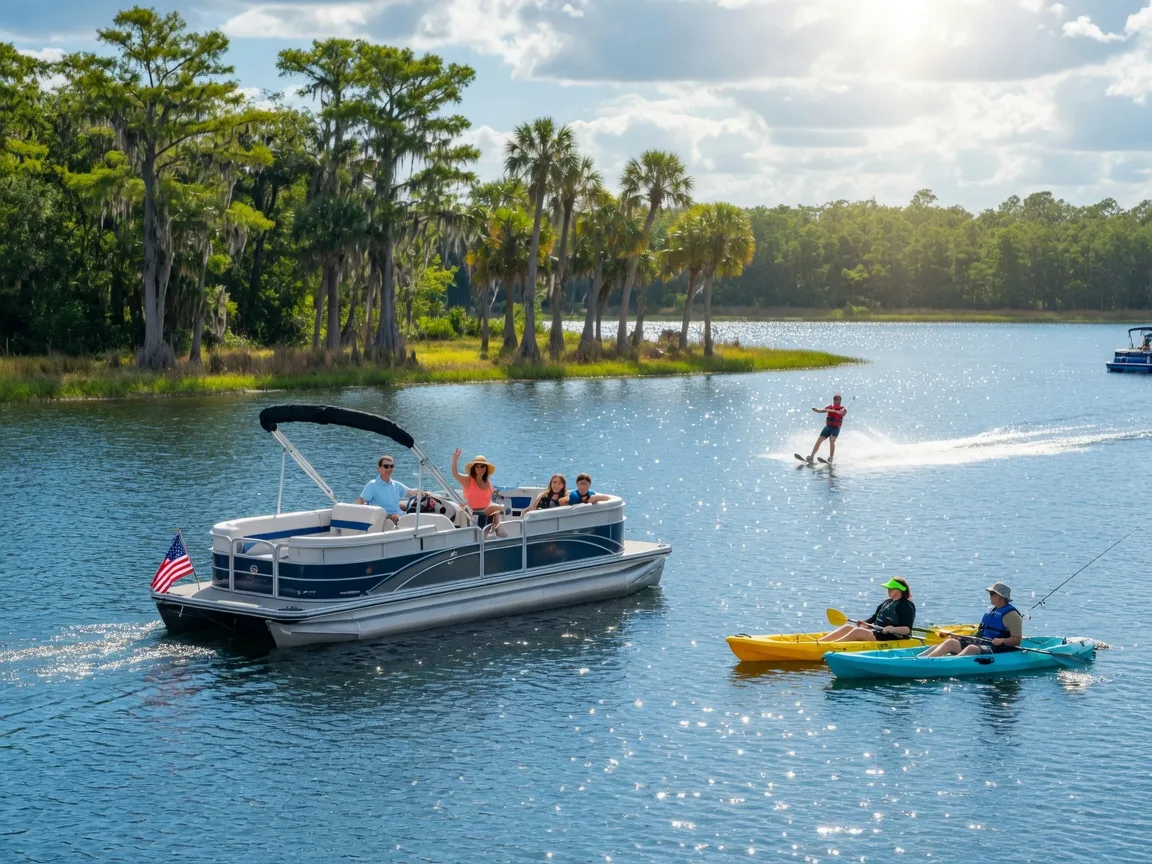
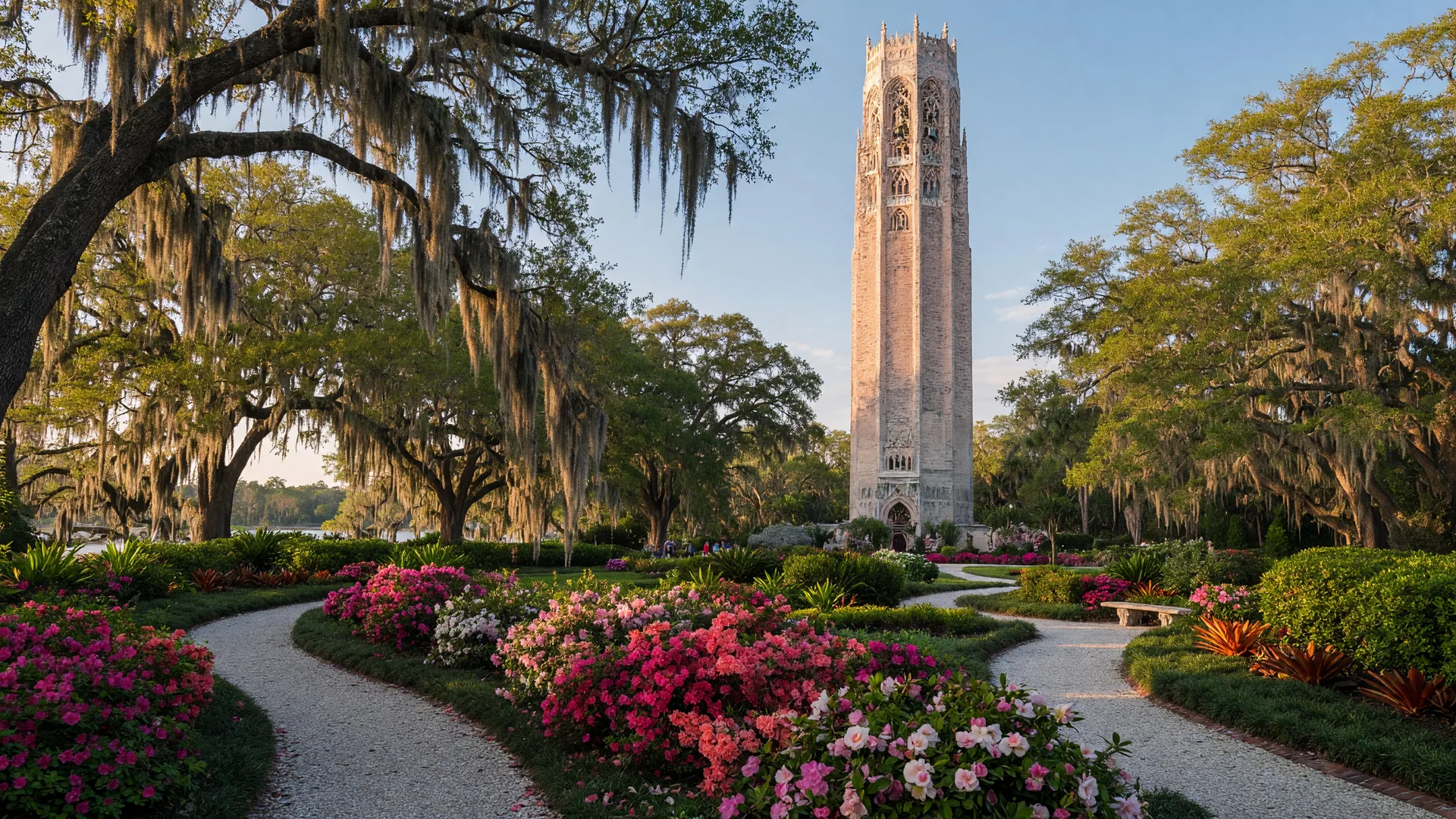
Before LEGOLAND, Winter Haven was home to Cypress Gardens, Florida's first major tourist attraction. Opened in 1936 by Dick Pope, the gardens introduced millions of visitors to waterski shows, Southern belles in hoop skirts, and spectacular botanical displays. The site's legacy continues through the preserved gardens within LEGOLAND and the role Winter Haven played in shaping Florida's tourism industry.
Gene Leedy Modernist Architecture
Architect Gene Leedy, a native of Winter Haven, became a key figure in the Sarasota School of Architecture. Several of his mid-century modern buildings remain in Winter Haven, including the Leedy House (his personal residence), the Polk County School Board building, and other structures that showcase his signature clean lines, post-and-beam construction, and indoor-outdoor living concepts.
Chain of Lakes Trail & Canals
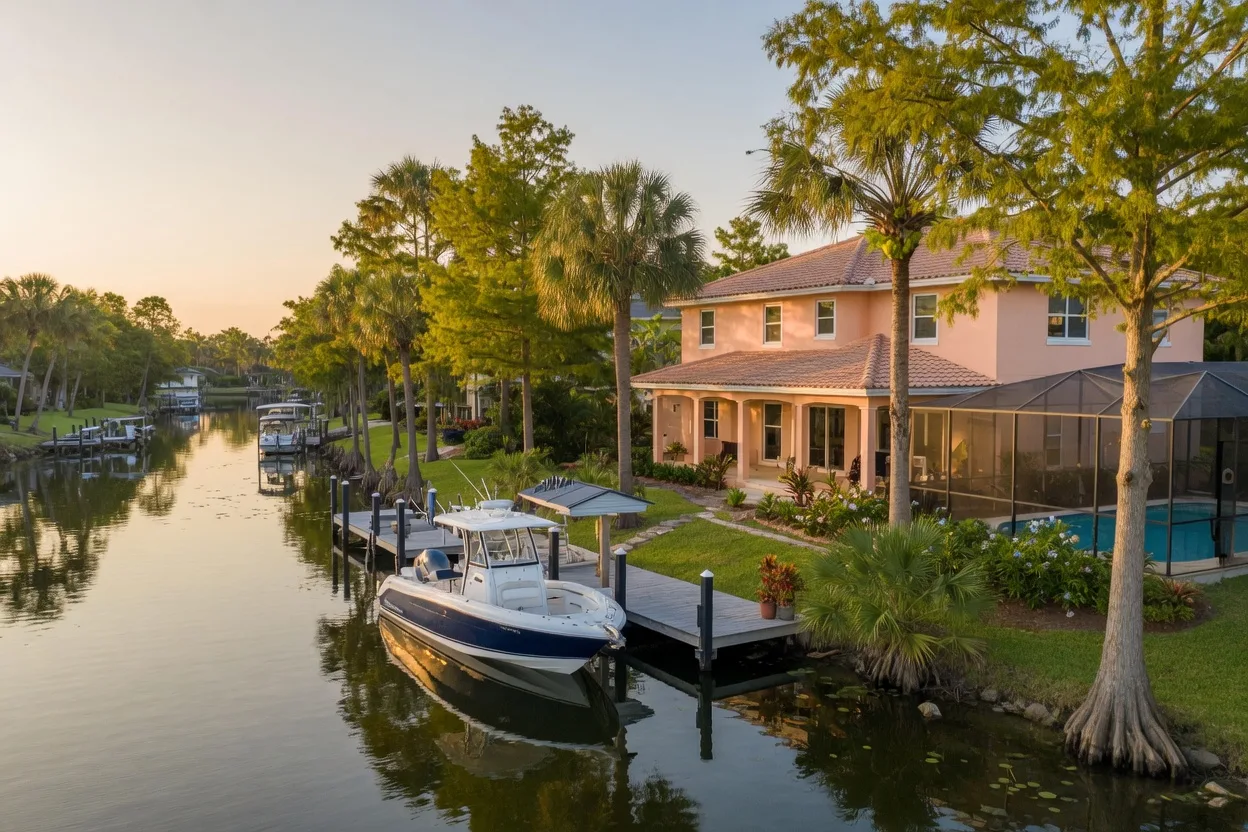
The canal system connecting Winter Haven's lakes is itself a historic resource. Built in the early 1900s to transport citrus and timber by barge, the canals were later adapted for recreational use. The Chain of Lakes Trail at Rotary Park tells the story of this engineering feat through interpretive signage, while the canals themselves remain navigable and actively used by boaters today.
A Lakeside Heritage
Winter Haven was first settled in the 1880s, named for the area's mild winter climate and abundant lakes. The arrival of the Atlantic Coast Line Railroad in the 1910s sparked a population boom as citrus growers, land developers, and tourists discovered the region. The city was formally incorporated in 1911 and grew rapidly through the Florida land boom of the 1920s.
In the 1920s, Winter Haven hosted Major League Baseball spring training, with the Philadelphia Phillies, Boston Red Sox, and Cleveland Indians all training here at various times. The city's baseball heritage is remembered in local parks and historical accounts, adding another layer to its rich recreational legacy.
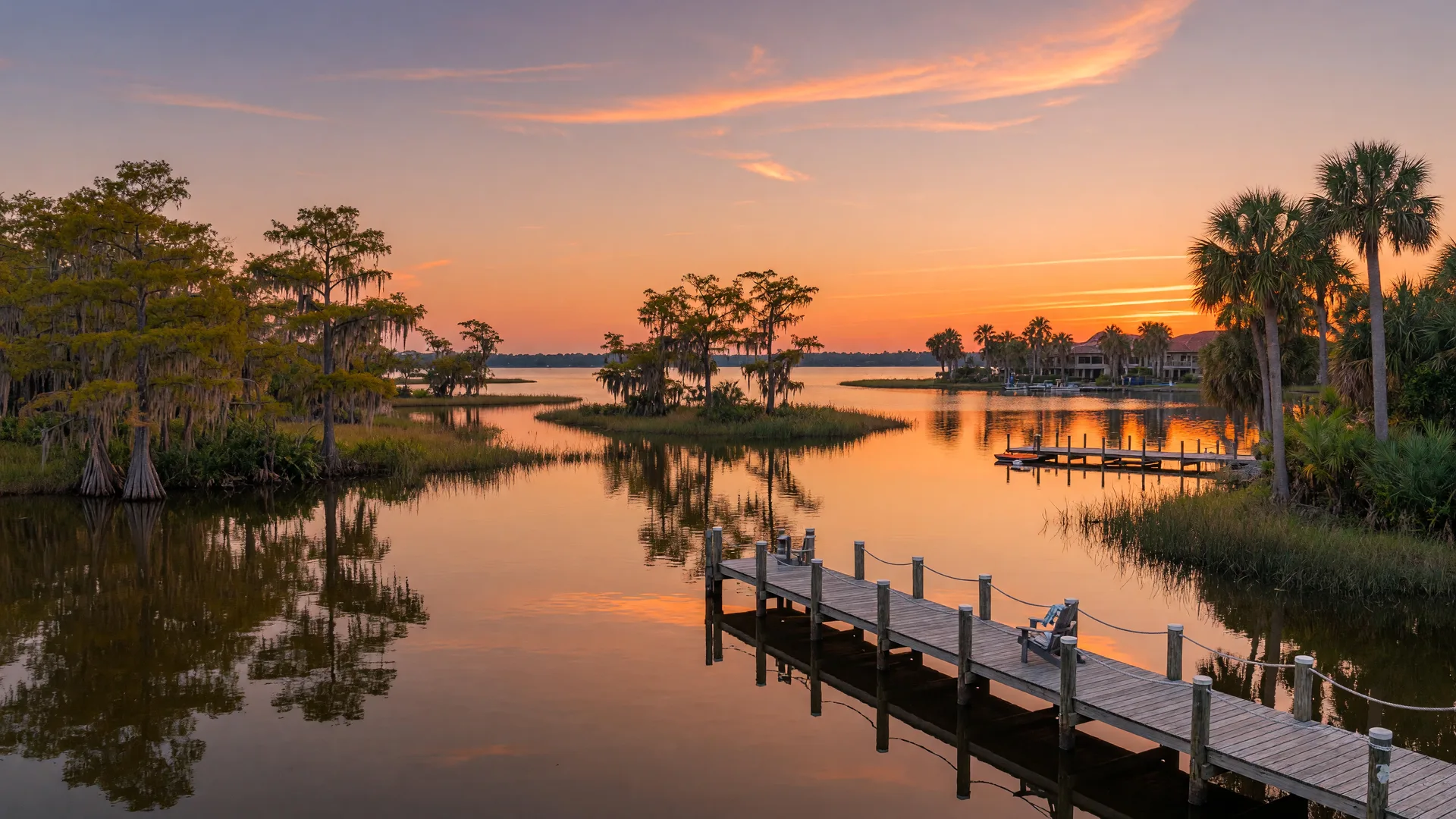
Winter Haven's identity has been shaped by water from the beginning — the lakes that drew settlers and tourists in the 1910s continue to define the city today. With LEGOLAND anchoring a new era of tourism and a revitalized downtown drawing new residents, Winter Haven is a community that honors its past while embracing a vibrant future.