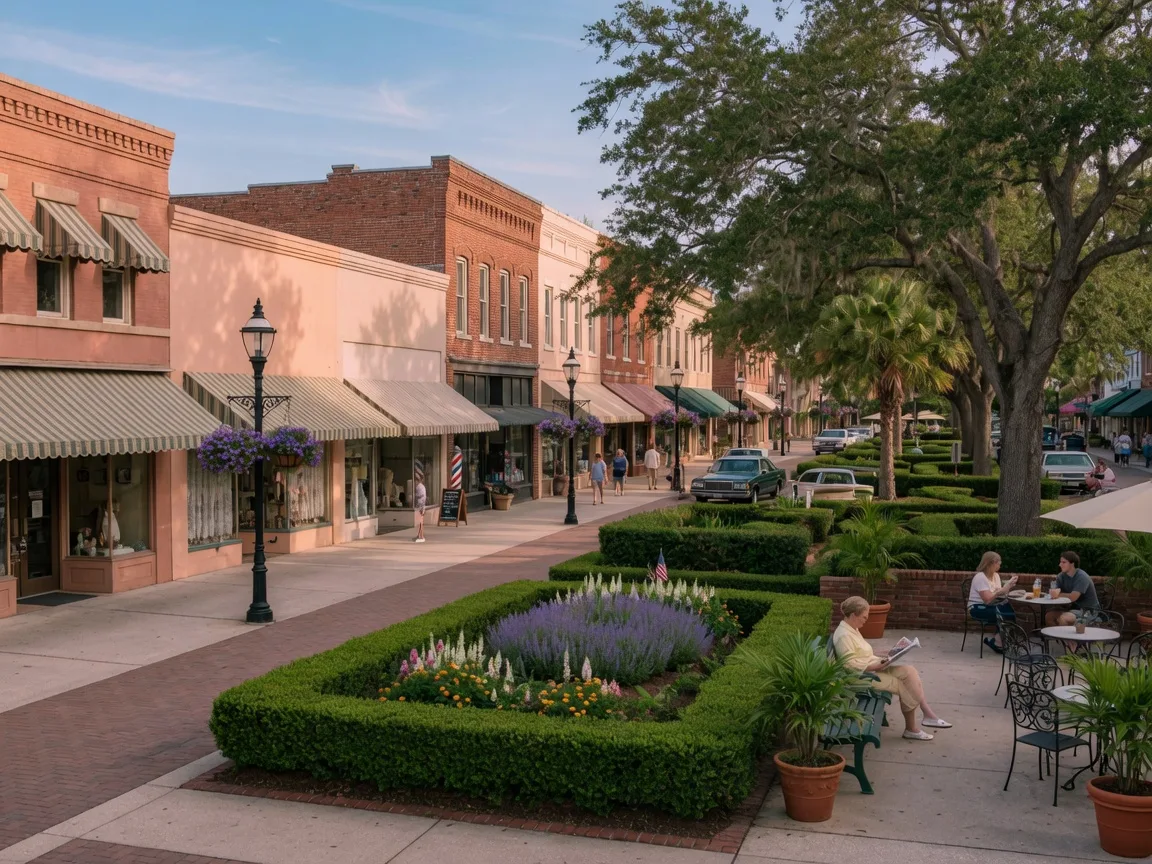
Lake Wales' historic downtown is a walkable National Historic District where early 20th century architecture, independent businesses, and community gathering spaces create a downtown experience that is both charming and authentic.
Market Street & Market Plaza
The heart of downtown Lake Wales is Market Street and the adjacent Market Plaza, a beautifully revitalized English-style garden with a lush lawn, shaded seating, and decorative landscaping. The plaza serves as the town's living room — a place for outdoor dining, weekend events, concerts, and quiet afternoons with a book.
The surrounding downtown district, roughly bounded by Central Avenue, Orange Avenue, First Street, and Scenic Highway, is characterized by brick and stucco storefronts, awnings, and wide sidewalks. Recent streetscape improvements have added ornate lighting, native landscaping, vibrant murals, and outdoor seating areas, making it an inviting place to stroll and linger.
You will find an eclectic mix of locally owned shops, antique stores, cafes, bakeries, and restaurants. It is the kind of downtown where the shopkeeper knows your name and the pace of life slows to something approaching unhurried.
Dixie Walesbilt Hotel
A landmark of downtown Lake Wales, the Dixie Walesbilt Hotel was added to the National Register of Historic Places in 1990. Built in the early 1920s, this six-story brick building with its distinctive parapet and terracotta details was the social and hospitality center of the city. Plans for restoration have made it a symbol of Lake Wales' ongoing revitalization.
Lake Wales History Museum
Housed in the beautifully restored 1928 Atlantic Coast Line Railroad Depot, this museum is itself a historic landmark listed on the National Register. Exhibits chronicle the city's railroad roots, the citrus industry, the construction of Bok Tower, and daily life in early Lake Wales. A must-visit for anyone wanting to understand the town's story.
Pinewood Estate (El Retiro)
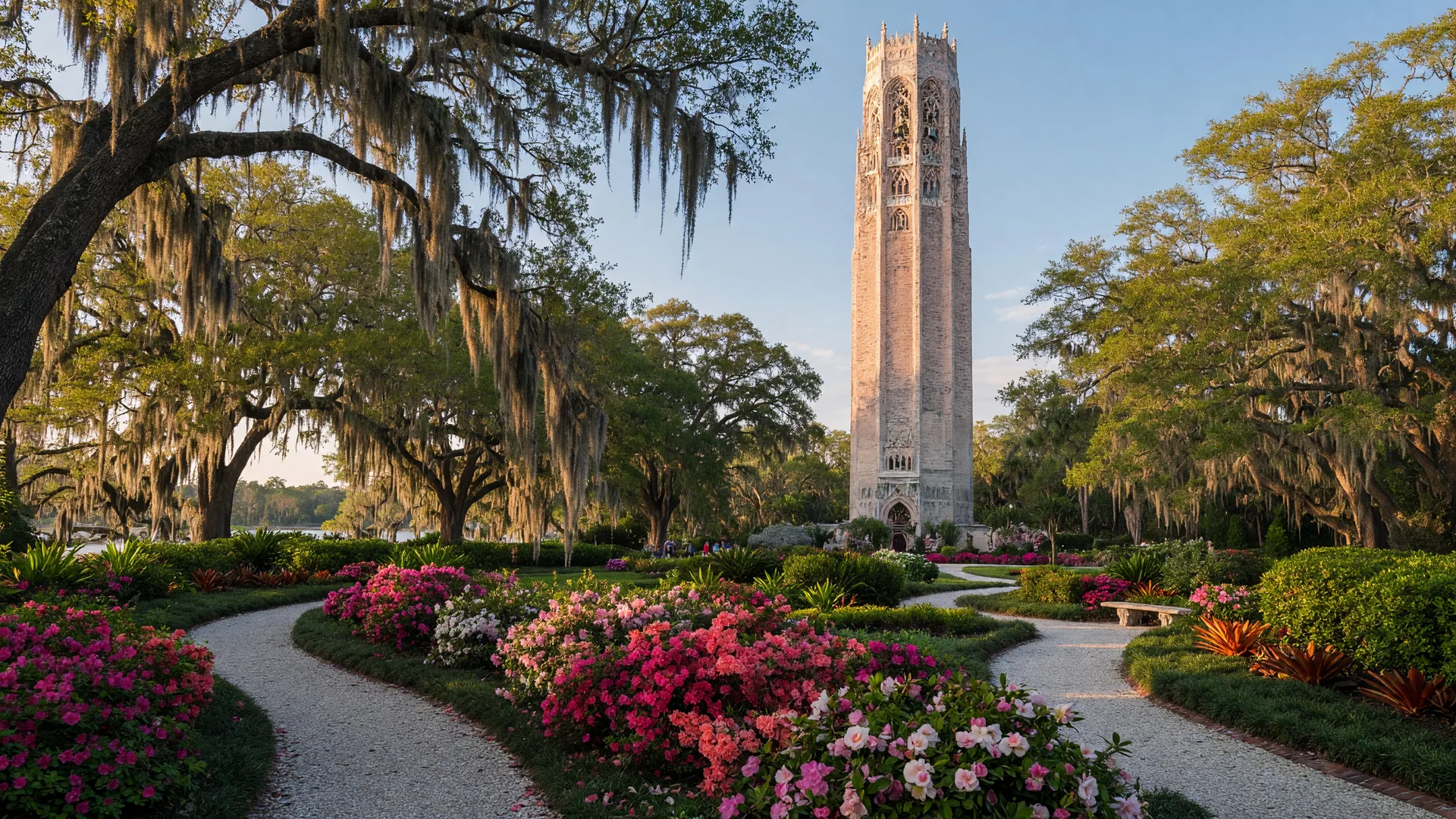
Located within Bok Tower Gardens, this 20-room Mediterranean Revival mansion was built in 1930 as the winter retreat of industrialist C. Austin Buck. Designed by architect William Lyman Phillips, who also designed much of the gardens, the estate features hand-painted tiles, wrought-iron fixtures, and terraced gardens with sweeping views.
City Hall & Municipal Buildings
Lake Wales' early civic architecture reflects the optimism of the 1920s Florida land boom. The historic post office and municipal buildings along Park Avenue and Stuart Avenue feature Mediterranean Revival and Art Deco influences, adding to the downtown's cohesive architectural character.
The Lake Wales Mural Trail
Downtown Lake Wales has embraced public art as part of its revitalization, with colorful murals adorning the sides of historic buildings. From depictions of the Singing Tower and citrus harvests to abstract works and community-created pieces, the murals add vibrancy to every stroll through the district.
Arts, Culture & Entertainment District
Lake Wales has established an Arts, Culture, and Entertainment District downtown to foster creative venues, outdoor dining, and special events. This designation supports local artists, musicians, and restaurateurs, and allows for expanded cultural programming throughout the year.
A Rich Heritage
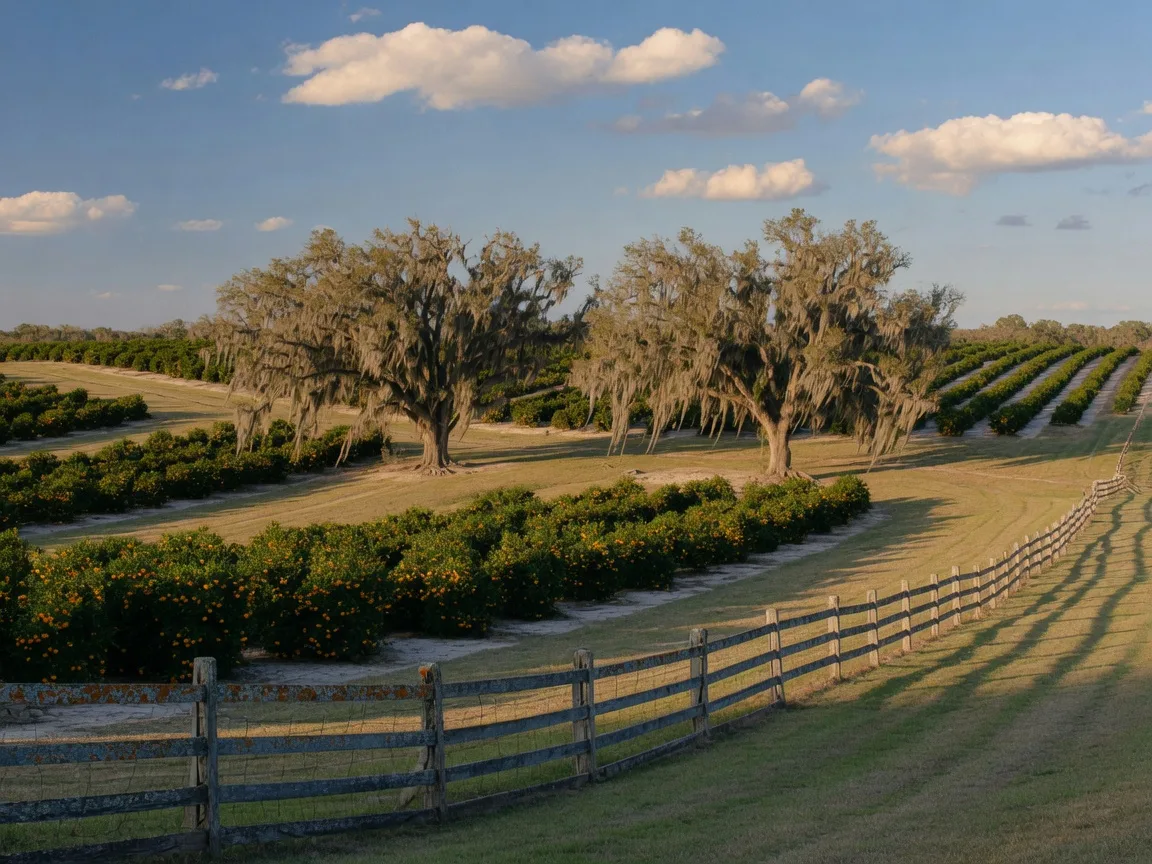
Lake Wales was founded in 1911, carved from the pine and scrub along the newly laid Atlantic Coast Line Railroad. The city was formally incorporated in 1917, and its early years were shaped by the citrus and timber industries that drew pioneers and entrepreneurs to the ridge. The 1920s brought a wave of development, including the grand Walesbilt Hotel, the railroad depot, and the vision of Edward Bok, who selected the highest point on the ridge for what would become one of Florida's most treasured landmarks.
Through the decades that followed, Lake Wales has retained its independent character. It is a community that values its past while embracing thoughtful growth — a place where the original downtown storefronts still house active businesses, where century-old trees shade residential streets, and where the story of the town is visibly woven into the fabric of daily life.