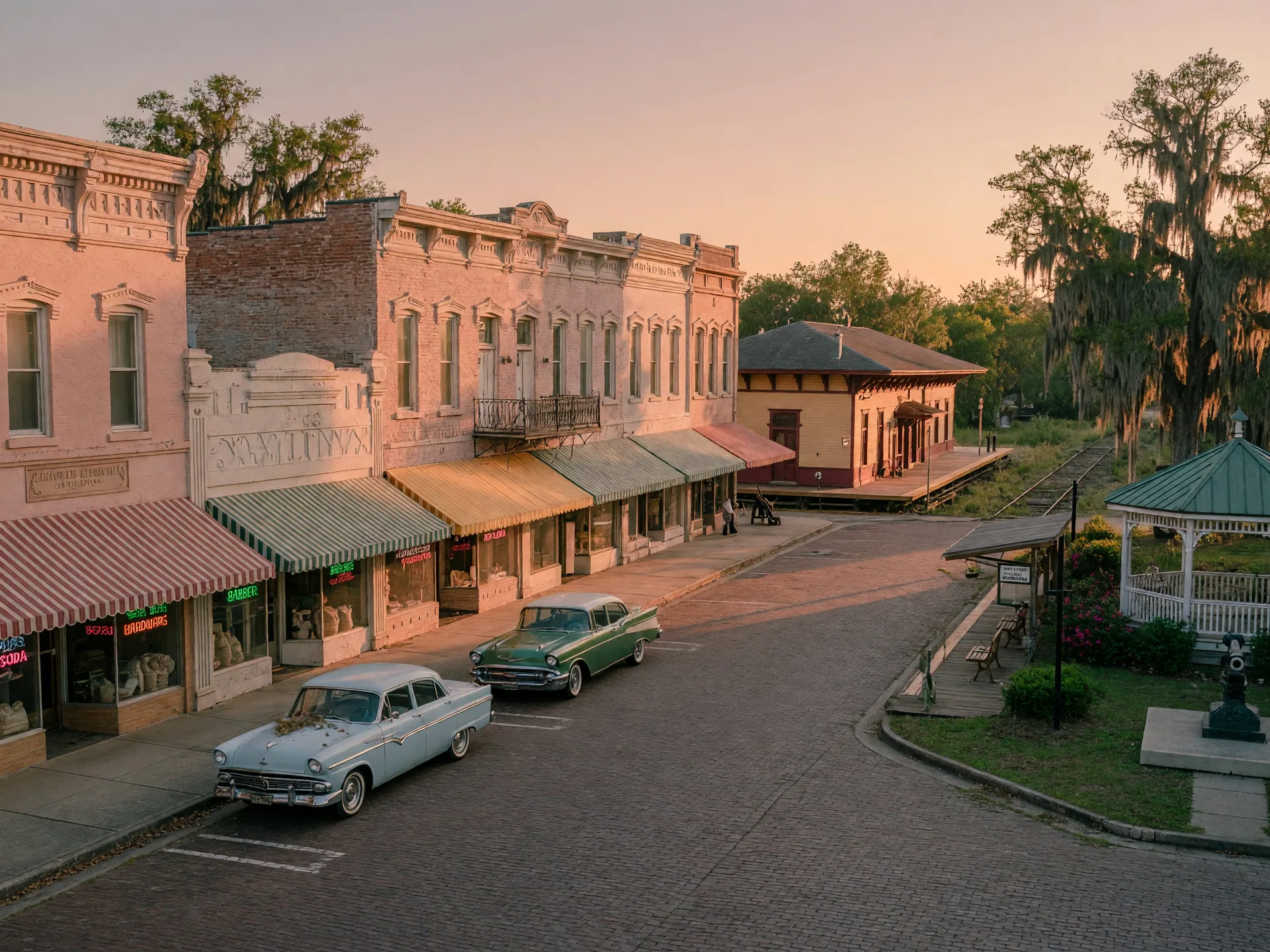
Auburndale's historic downtown, centered on the lakeside City Park, preserves the character of an early 20th century Florida railroad town with its brick streets, vintage storefronts, and community landmarks.
Historic Downtown & City Park
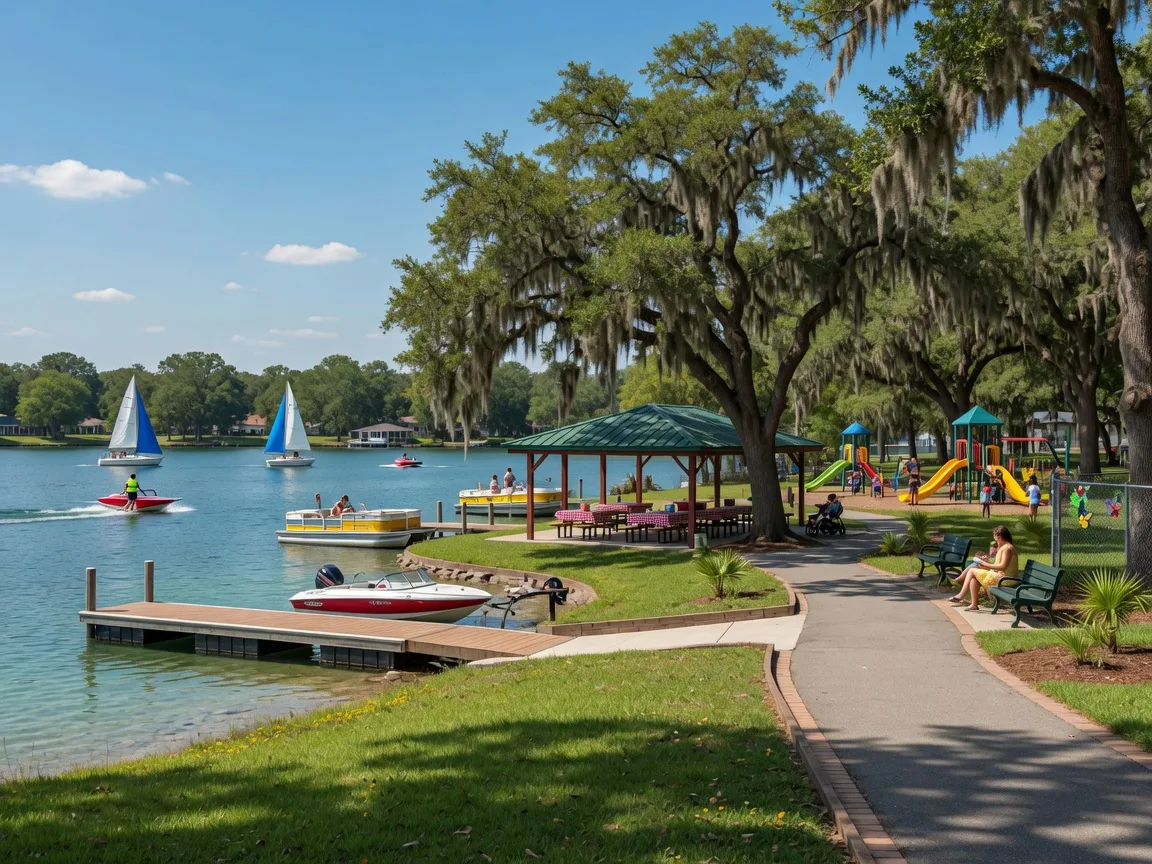
The heart of Auburndale's old downtown is the Downtown City Park, a green gathering space that has anchored the commercial district for over a century. Around it stand early 1900s brick and stucco commercial buildings, many with awnings and storefronts that recall the town's railroad-era peak. The old train station still stands beside the park near the lake, a quiet reminder of the trains that put Auburndale on the map.
The district has been carefully preserved over the years, with brick-paved streets and a walkable layout that encourages strolling from shop to shop. The Auburndale Rotary Butterfly Garden, tucked into the Historic Downtown Park, adds a colorful pocket of native plants and pollinator habitat right in the middle of town.
Downtown Auburndale is the kind of place where neighbors greet each other by name, where the market sets up under the oaks, and where a century of history is still visible in the buildings overhead.
Baynard House Museum
The restored 1894 Ephraim Mikel Baynard home, one of the area's oldest surviving residences, is open for guided tours. The house museum offers a window into late 1800s Florida life and the pioneering families who settled the Auburndale area.
Auburndale City Hall (1927)
Built in 1927, Auburndale's historic City Hall is a landmark of the downtown district. Its well-preserved municipal architecture reflects the confident growth of the town during Florida's 1920s land boom.
1920 Citrus Growers Packing House
Built in 1920 by the Auburndale Citrus Growers Association, the packing house recalls the city's citrus economy, when trainloads of oranges and grapefruit rolled north from Polk County. It stands as a monument to the region's agricultural roots.
Historic Train Station at City Park
The old depot beside the lake in City Park is a physical link to the Atlantic Coast Line and Seaboard Air Line era, when passenger and freight trains made Auburndale one of Florida's busiest small-town junctions.
Auburndale Rotary Butterfly Garden
Located in the Historic Downtown Park, the butterfly garden brings native plants and pollinators to the center of town, creating a peaceful spot to sit and enjoy the heart of downtown.
Brick-Street Commercial District
Auburndale's early 1900s commercial district, with its brick streets, awnings, and vintage storefronts, preserves the look and feel of a Florida railroad town and is best explored on foot.
A Railroad Town at Heart
The story of Auburndale begins in 1880, when settler Frank Fuller established a community first called Sanatoria, after a local hotel. When the railroad pushed into Polk County in the 1880s, following Henry B. Plant's South Florida Railroad, the settlement was renamed Auburndale for a town in Massachusetts, and the city was incorporated in 1911.
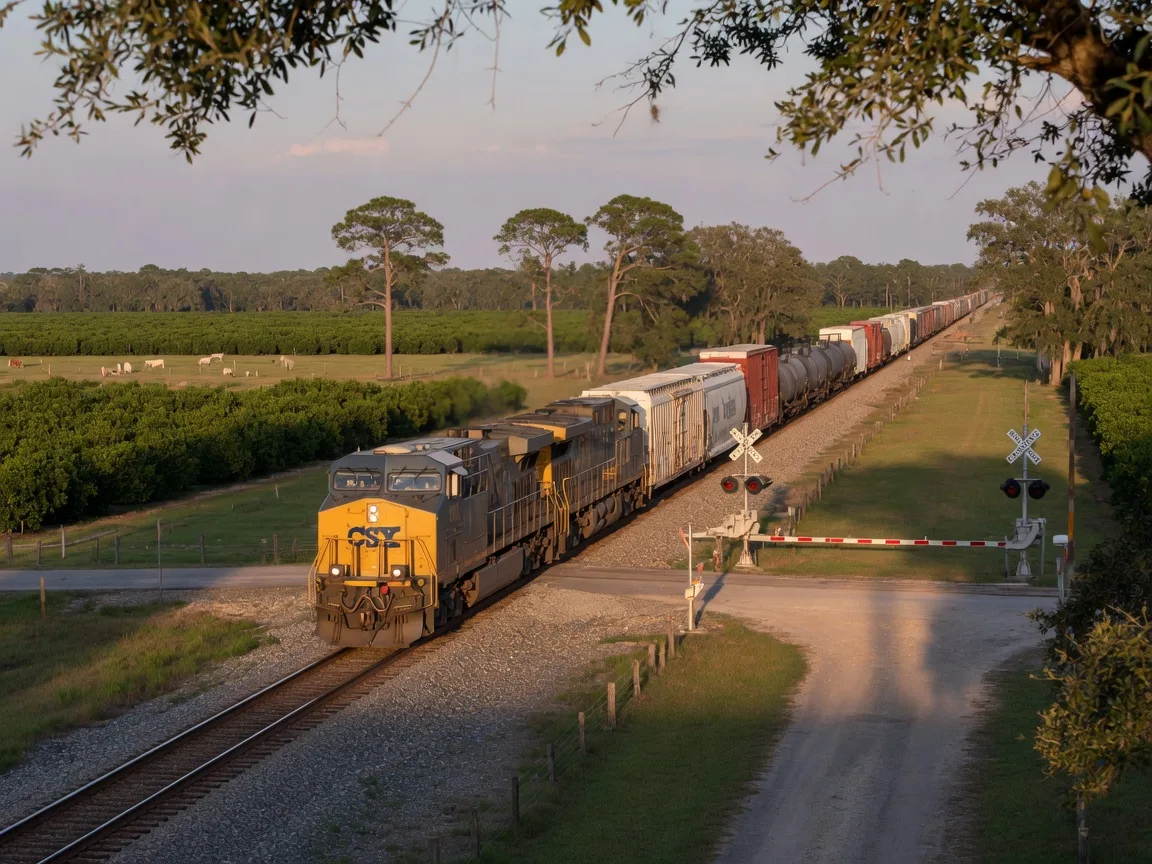
The rails made the town. Auburndale became a key junction where the Atlantic Coast Line and Seaboard Air Line crossed, and for generations the sound of freight and passenger trains was the soundtrack of daily life. The two railroads merged to form the Seaboard Coast Line in 1967, and Amtrak took over passenger service in 1971, ending the era of the West Coast Champion passenger trains. Today the CSX Auburndale yard keeps the city one of Central Florida's most important rail hubs, a fitting legacy for a town that grew up along the tracks.